Category: Loyalty Program

  • How to Join Air India Maharaja Club and Book an Award Flight: A Step-by-Step Guide

    How to Join Air India Maharaja Club and Book an Award Flight: A Step-by-Step Guide

    30,000 Maharaja Points + ₹3,782. That’s all I needed to find a one-way Economy award flight from Delhi to Osaka on Air India’s upcoming non-stop route to Japan.

    When I shared this on Instagram, I got a few excited responses. But one question kept coming up:

    “This looks great, but how do I actually book a flight using Maharaja Points?”

    Fair question. Knowing that an airline offers award flights is one thing. Actually finding a seat, figuring out how many points you need, and completing the booking is another.

    So, instead of sending everyone down a rabbit hole on Air India’s website, I thought I’d put together a practical guide.

    In this article, we’ll cover two things:

    • How to join Air India Maharaja Club for free.
    • How to search for and book an award flight using Maharaja Points.

    If you’re new to airline loyalty programmes, don’t worry. You don’t need to understand every detail of frequent flyer programmes to get started.

    And if you want to understand how the programme works beyond booking tickets, including membership tiers, earning points, status benefits and credit-card transfers, read my detailed guide: Air India Maharaja Club: Is It Finally a Frequent Flyer Programme Worth Caring About?

    For now, let’s get you ready to book your first award flight.

    Air India aircraft fuselage with Hindi livery

    Step 1: Join Air India Maharaja Club

    The first thing you need is a Maharaja Club account.

    The good news? Membership is completely free. There is no enrolment fee or annual membership charge.

    You can join regardless of where you live or which passport you hold.

    Here’s how to get started:

    1. Visit Air India’s official website and navigate to Maharaja Club → Create an Account.
    2. Enter your personal details. Make sure your name matches your passport or government-issued ID exactly. If you have a middle name, include it.
    3. Enter your email address and mobile number. Both must be unique and cannot already be registered to another Maharaja Club account.
    4. Verify your email using the link Air India sends you, and enter the OTP received on your mobile number.

    That’s it. You’re now a Maharaja Club member.

    You’ll receive a nine-digit Maharaja Club ID and a digital membership card, which you can download from the My Account section.

    One small bonus worth knowing about

    After your first qualifying paid flight on Air India, Air India Express or an eligible Air India Express codeshare, you receive 1,000 bonus Maharaja Points.

    There’s one important catch: award flights do not qualify for this bonus.

    A couple of other rules to keep in mind:

    • Membership is for individuals, not companies, travel agents or other commercial entities.
    • Each person can have only one account, linked to a unique email address and mobile number.

    My take: If you travel with Air India even occasionally, there’s little reason not to join. You can create the account now and worry about earning and redeeming points later.

    Step 2: Figure out how many Maharaja Points you need

    Now comes the important question: how many points will your flight cost?

    There are two ways to find out.

    Option 1: Use Air India’s Points Calculator

    Visit Air India’s website and look for the Maharaja Club Points Calculator. Enter your airline, cabin class, origin and destination to check the points required.

    Option 2: Search for the actual flight

    This is the approach I prefer when planning a real trip.

    Search for your route and travel dates, select the option to pay with points, and check the available award fares. This lets you see the actual options available for your journey rather than relying only on an indicative points requirement.

    Remember that the points required and the availability of award seats can vary.

    Where can you earn Maharaja Points?

    You can earn points through several channels, including:

    • Flights on Air India and Air India Express.
    • Eligible flights with Star Alliance partner airlines.
    • Air India’s non-airline partners.
    • Transfers from participating credit-card rewards programmes.

    I’ve covered the earning options and banking partners in my main Maharaja Club guide, so I won’t repeat all of that here.

    However, there’s one rule I would strongly recommend following.

    Never transfer your credit-card points before confirming that the award seat you want is available.

    Why? Because points transfers are generally irreversible, while award availability can change at any time.

    You don’t want to transfer a large balance of credit-card points only to discover that the flight you wanted is no longer available.

    Find the seat first. Transfer the points second.

    Step 3: Search for award flights

    This is where things get interesting.

    If you’ve booked a regular flight online before, you already know most of the process. The main difference is that you select points as your payment method.

    Here’s how to do it:

    1. Sign in to your Maharaja Club account on Air India’s website or mobile app.
    2. Search for your origin, destination and travel dates, just as you would for a regular flight.
    3. Select the option to pay using Maharaja Points.
    4. Review the available flights, points prices and applicable taxes and fees.

    On eligible Air India flights, you may also see a Cash + Points option if you don’t have enough points to cover the entire award fare.

    Understanding Value and Prime award fares

    When searching for award flights, you may come across two types of fares: Value and Prime.

    FeatureValuePrime
    Points requiredLower points priceHigher points price
    Best suited forTravellers who can plan aheadPeak-season or last-minute travel
    AvailabilityDepends on award inventoryMay offer options when demand is higher

    The distinction matters because not every seat on a flight is necessarily available at the lowest points price.

    For example, you might find an Economy award seat for 30,000 points on one date, while another date or fare option requires more points.

    This is why flexibility can be valuable. If your travel dates aren’t fixed, compare nearby dates before committing your points.

    Can you book one-way, return and multi-city flights?

    You can book one-way or return award tickets. However, multi-city bookings using points are not available under the process described here.

    Also, award seats are limited. The fact that you can see a flight on Air India’s website does not automatically mean that an award seat is available on it.

    Can you use Maharaja Points on other airlines?

    Yes. The programme allows redemptions on Air India, eligible Air India Express codeshare flights and 25 Star Alliance partner airlines.

    However, online booking is not available for every partner.

    According to the programme information covered in this guide, online award bookings are available for the following partner airlines:

    • United Airlines
    • Lufthansa
    • Air Canada
    • Singapore Airlines
    • Air New Zealand
    • Austrian Airlines

    For other Star Alliance partners, you may need to contact Air India customer care to make the booking.

    My advice: Start with an Air India flight if this is your first redemption. Once you’re comfortable with the process, explore partner-airline awards as well.

    Step 4: Book your award ticket

    Found a flight at a points price you’re happy with? Great. Now it’s time to book.

    Follow these steps:

    1. Select your preferred award fare.
    2. Enter the passenger details. Names must match the relevant travel documents and your Maharaja Club account details.
    3. Review the points required, taxes and other applicable fees.
    4. Pay the taxes and fees using an accepted payment method.
    5. Complete the verification process using the OTP sent to your registered mobile number.

    Once the booking is completed successfully, Air India issues your e-ticket just as it would for a regular paid booking.

    Don’t forget the taxes and convenience fee

    An award ticket is not necessarily a completely free ticket.

    You use points to pay for the award fare, but taxes and applicable fees are payable separately in cash.

    Air India also charges a convenience fee per person, per ticket.

    Award booking categoryConvenience fee
    Domestic flights within India₹399
    India to short-haul international destinations₹649
    India to long-haul international destinations, including Japan, Europe, the USA and the UK₹999

    The stated payment options include American Express, Visa, Mastercard, Diners Club and Discover credit cards.

    These charges are separate from the points deducted from your account. Always check the final amount displayed before confirming your booking.

    A real example: Delhi to Osaka for 30,000 points

    This is the redemption that prompted me to write this guide.

    Air India is scheduled to launch its non-stop Delhi–Osaka (Kansai) service on 2 February 2027. The flight details and award prices below are based on the search I made when preparing this article.

    The flight, AI360, is scheduled to depart Delhi at 10:50 PM and arrive in Osaka at 9:50 AM the following morning, with a published journey time of approximately 7 hours and 30 minutes.

    Here’s what I found when I checked award availability.

    RouteEconomyBusiness
    Delhi → Osaka30,000 points + ₹3,78290,000 points + ₹18,692
    Osaka → Delhi30,000 points + ₹4,46590,000 points + ₹4,547

    When I searched, I could see four Economy award seats and two Business award seats on my selected dates.

    That’s the interesting part.

    A non-stop international flight to Japan, booked using points rather than paying the entire airfare in cash, is a tangible example of why frequent flyer programmes deserve attention.

    Of course, the value depends on the cash fare you would otherwise pay, the points you spend and the taxes involved. These figures are not a guarantee of future availability or pricing.

    Award seats can disappear, and prices can change. If you find a redemption that works for your plans, don’t assume the same option will still be there next week.

    Six things to know before booking

    Before you redeem your points, keep these programme rules in mind.

    1. You still pay taxes and fees

    Even if the award fare is covered entirely by Maharaja Points, applicable taxes and fees must be paid separately in cash.

    2. Award tickets have a validity period

    Award tickets are valid for one year from the date of issue and must have confirmed travel details. Open-dated award tickets are not available.

    3. Award tickets don’t have monetary refund value

    An award ticket does not have a cash refund value in the way a monetary ticket might. Review the applicable cancellation, refund and change conditions before booking.

    4. Booking for family and friends comes with a condition

    You can book award tickets for other people, but the programme rules described here require you to have completed at least two Air India or Air India Express flights under different booking references, with those flights credited to your account.

    5. Child and infant bookings work differently

    Child award tickets require the same number of points as adult award tickets.

    For infants under two years of age, you cannot add the infant during the initial award booking process. You need to contact Air India customer support after booking to arrange the addition.

    6. NeuCoins and Maharaja Points cannot be combined

    You cannot combine NeuCoins and Maharaja Points to pay for an award flight.

    Also, make sure your passenger name matches the name on your Maharaja Club account. Differences in names can create problems when earning or redeeming points.

    These are the programme conditions covered in this guide. Check Air India’s current terms before making a booking, particularly if your plans may change.

    So, is booking an award flight difficult?

    Honestly, no.

    Once you have a Maharaja Club account and enough points, the booking process is fairly straightforward. You search for a flight, select an award fare, pay the taxes and fees, and complete the verification process.

    The real challenge is not clicking the right buttons. It is understanding how many points a flight is worth to you, finding award availability and avoiding unnecessary transfers of credit-card points.

    If you remember only three things from this article, make them these:

    • Join first: Maharaja Club membership is free.
    • Search before transferring: Confirm that your preferred award seat is available before moving credit-card points.
    • Compare the complete cost: Consider the points required, cash taxes and fees, and the price of buying the ticket outright.

    My recommendation is to start with a destination you genuinely want to visit rather than collecting points without a redemption plan.

    Search for the flight. Check the points price. Compare it with the cash fare. Then decide whether the redemption makes sense.

    Because earning points is easy. The trick is knowing when they’re worth spending.


    Disclaimer: Maharaja Club programme rules, award availability, points pricing and fees are subject to change. The Delhi–Osaka flight details and award prices in this article reflect the information and search results available to me when preparing this draft in October 2026. Please verify the latest information on Air India’s official website before booking.


  • Air India Maharaja Club: Is It Finally a Frequent Flyer Programme Worth Caring About?

    Air India Maharaja Club: Is It Finally a Frequent Flyer Programme Worth Caring About?

    For years, Air India’s frequent-flyer programme wasn’t exactly the first thing that came to mind when I thought about airline miles.

    It was called Flying Returns.

    The name was forgettable.

    The website wasn’t exactly inspiring.

    And if you were serious about points and miles, there were usually better programmes to think about.

    Then came the Air India transformation.

    Flying Returns became Maharaja Club.

    Air India joined Star Alliance more deeply into its loyalty proposition.

    Vistara’s Club Vistara was merged into the programme.

    And, in 2026, Air India made another round of changes to points requirements, status qualification and award-ticket flexibility.

    So the obvious question is:

    Is Maharaja Club now worth taking seriously?

    After using it myself, my answer is:

    Yes.

    But with one very important qualification:

    You need to understand how the programme works before deciding whether it is actually valuable for you.

    So let’s break it down.


    Air India wing seen from the window in flight

    First: what is Maharaja Club?

    Maharaja Club is Air India’s frequent-flyer programme.

    It replaced the old Flying Returns programme in 2024, following the integration of Club Vistara into Air India’s loyalty ecosystem. Air India retained the four-tier structure of Red, Silver, Gold and Platinum, while renaming the reward currency Maharaja Points.

    And there are actually two different types of points you need to understand.

    This is probably the most important thing in this entire article.

    Maharaja Points

    These are your redeemable points.

    You can use them for:

    • Award flights
    • Cabin upgrades
    • Eligible Air India Express redemptions
    • Star Alliance award flights

    And they can also be earned through selected non-airline partners.

    Tier Points

    These are your status points.

    They help you move from:

    Red → Silver → Gold → Platinum

    They cannot simply be redeemed for flights.

    Think of it as:

    Maharaja Points = money

    Tier Points = status

    Once you understand that distinction, Maharaja Club becomes much easier.


    The four Maharaja Club tiers

    There are currently four levels:

    TierQualificationMaharaja Points earned on Air India/AI ExpressWhat matters
    RedJoin Maharaja Club6 / ₹100Basic membership
    Silver15,000 Tier Points OR 20 flights8 / ₹100Baggage + upgrade vouchers
    Gold30,000 Tier Points OR 45 flights9 / ₹100Lounge + seat selection + Fly Prior + stronger flexibility
    Platinum45,000 Tier Points OR 60 flights10 / ₹100Best overall benefits + highest flexibility

    For the flight-count route, there are minimum Air India/Air India Express flight requirements:

    Silver: 20 flights, including at least 4 Air India/Air India Express flights

    Gold: 45 flights, including at least 8 Air India/Air India Express flights

    Platinum: 60 flights, including at least 12 Air India/Air India Express flights.

    For the Tier Points route, you also need a minimum portion earned on Air India/Air India Express.

    And here’s an important change from the old programme:

    The flight-count thresholds are now much lower than they used to be.

    Air India revised these in 2026 to make status progression easier for frequent flyers.


    But how do you actually earn Maharaja Points?

    This is where Maharaja Club gets interesting.

    On eligible Air India flights, your base earning depends on your tier.

    Currently:

    Red: 6 Maharaja Points / ₹100

    Silver: 8 / ₹100

    Gold: 9 / ₹100

    Platinum: 10 / ₹100

    And there’s an additional:

    +2 Maharaja Points / ₹100

    when you book directly through the Air India website or app.

    So a Platinum member booking directly can potentially earn:

    12 Maharaja Points per ₹100

    on eligible Air India bookings.

    That’s a 12% points earning rate on eligible fare spend, before considering the actual value of those points.

    But there’s an important catch.

    The earning calculation isn’t simply based on everything you paid for the ticket.

    For Air India, Maharaja Points and Tier Points are calculated using the eligible fare components, with taxes and additional fees excluded.

    Air India Express has its own earning calculation, currently based on the base fare.


    Air India Express is now part of the game

    Air India Express wing

    This is a significant development.

    Since May 2026, Maharaja Club members can earn Maharaja Points and Tier Points on eligible Air India Express flights as well.

    For Air India Express, the earning rates are:

    Booking channelRedSilverGoldPlatinum
    Air India Express website/app8101112
    Other channels68910

    These are Maharaja Points per ₹100 of eligible spend.

    So if you’re someone who regularly flies around India, the fact that Air India Express is now part of the programme makes Maharaja Club considerably more relevant.


    And then there’s Star Alliance

    This is where I think Maharaja Club becomes much more interesting than just an Air India loyalty programme.

    Air India is a Star Alliance member.

    That gives Maharaja Club members the ability to earn and redeem on Air India and Star Alliance partner airlines, subject to the relevant earning and redemption rules.

    That means your Maharaja Club ecosystem can extend beyond Air India.

    You could potentially earn or redeem across airlines such as:

    Lufthansa

    Singapore Airlines

    Thai Airways

    United

    Turkish Airlines

    Swiss

    ANA

    and the rest of the Star Alliance network.

    Air India currently lists 25 Star Alliance partner airlines in its Maharaja Club ecosystem.

    This is a big deal.

    Because you’re no longer looking at Maharaja Club as:

    “Air India’s points programme.”

    You’re looking at it as:

    “An Indian airline’s loyalty currency connected to a global alliance.”


    Air India fuselage with Hindi livery and windows

    So what does each status actually get you?

    This is where I think the programme starts becoming interesting.

    Red

    Red is basically your entry-level membership.

    You can:

    • Earn Maharaja Points
    • Earn Tier Points
    • Redeem points
    • Access partner opportunities
    • Access Customer Support

    But there isn’t much reason to chase Red.

    You’re already Red when you join.


    Silver

    Silver is the first tier I’d actively consider chasing.

    You get:

    Extra baggage

    You get +5 kg on Air India flights where the weight system applies.

    Upgrade vouchers

    You receive one domestic cabin upgrade voucher on tier upgrade/renewal, subject to availability and validity.

    Priority check-in

    Second-priority boarding

    Priority waitlist

    And you also start earning more Maharaja Points:

    8 vs 6 per ₹100.

    So Silver is not just a shiny card.

    There are tangible benefits.


    Gold

    Gold is where the programme starts becoming genuinely attractive.

    You get everything from Silver plus:

    Lounge Access with one Guest

    Complimentary seat selection

    Standard seats are free on eligible Air India bookings.

    Fly Prior

    If you arrive early at the airport, Gold members can switch to an earlier Air India domestic flight on the same route/date/cabin, subject to availability.

    And the fee is waived.

    Better baggage allowance

    Complimentary excess baggage allowance: +20 kg on Air India flights where free baggage allowance is as per the weight system, or 1 additional piece up to 23 kg where it is as per the piece system.

    More upgrade vouchers

    Gold members receive two domestic upgrade vouchers on tier upgrade/renewal.

    Better award-ticket flexibility

    This is something I particularly like about the new programme.

    Gold members can cancel eligible Award Flights without a fee up to 7 days before departure.

    Outside the free window, a 25% fee applies.

    That’s significantly more useful than it sounds if your travel plans change frequently.


    Platinum

    And then we reach the tier I personally find the most interesting.

    Platinum requires:

    45,000 Tier Points

    or

    60 eligible flights, including at least 12 Air India/Air India Express flights.

    And the benefits start stacking up.

    Lounge access + one guest

    Platinum members get lounge access and can bring a guest travelling on the same Air India-operated or Star Alliance flight, subject to the applicable conditions.

    20 kg additional baggage

    On Air India weight-based baggage journeys.

    Or an additional piece up to 23 kg where the piece system applies.

    Free seat selection

    Not just standard seats.

    All seats across the network, subject to the programme conditions.

    Three upgrade vouchers

    You receive three domestic cabin upgrade vouchers on tier upgrade/renewal.

    Fly Prior

    Complimentary.

    First-priority boarding

    Priority waitlist

    Better cancellation flexibility

    And this is perhaps my favourite Platinum benefit:

    For eligible Award Flights, Platinum members can cancel or reschedule up to 2 hours before departure and get their Maharaja Points refunded without the normal cancellation charge.

    That’s a very powerful benefit.

    Especially for someone who books award tickets regularly.


    The tier comparison I would actually use

    If I strip away the marketing language, this is how I’d look at it:

    BenefitRedSilverGoldPlatinum
    Earn Maharaja Points✅✅✅✅
    Earn Tier Points✅✅✅✅
    Lounge access❌❌✅✅
    Guest in lounge❌❌✅✅
    Priority check-in❌✅✅✅
    Priority boarding—2nd1st1st
    Extra baggage—+5 kg+20 kg+20 kg
    Free standard seat selection❌❌✅✅
    Free all-seat selection❌❌❌✅
    Fly Prior❌❌✅✅
    Upgrade vouchers—123
    Award cancellation flexibility—30 days7 days2 hours
    Reward earning rate68910

    That’s where the programme starts making sense.

    Silver is useful.

    Gold is good.

    Platinum is where I’d actually chase status.


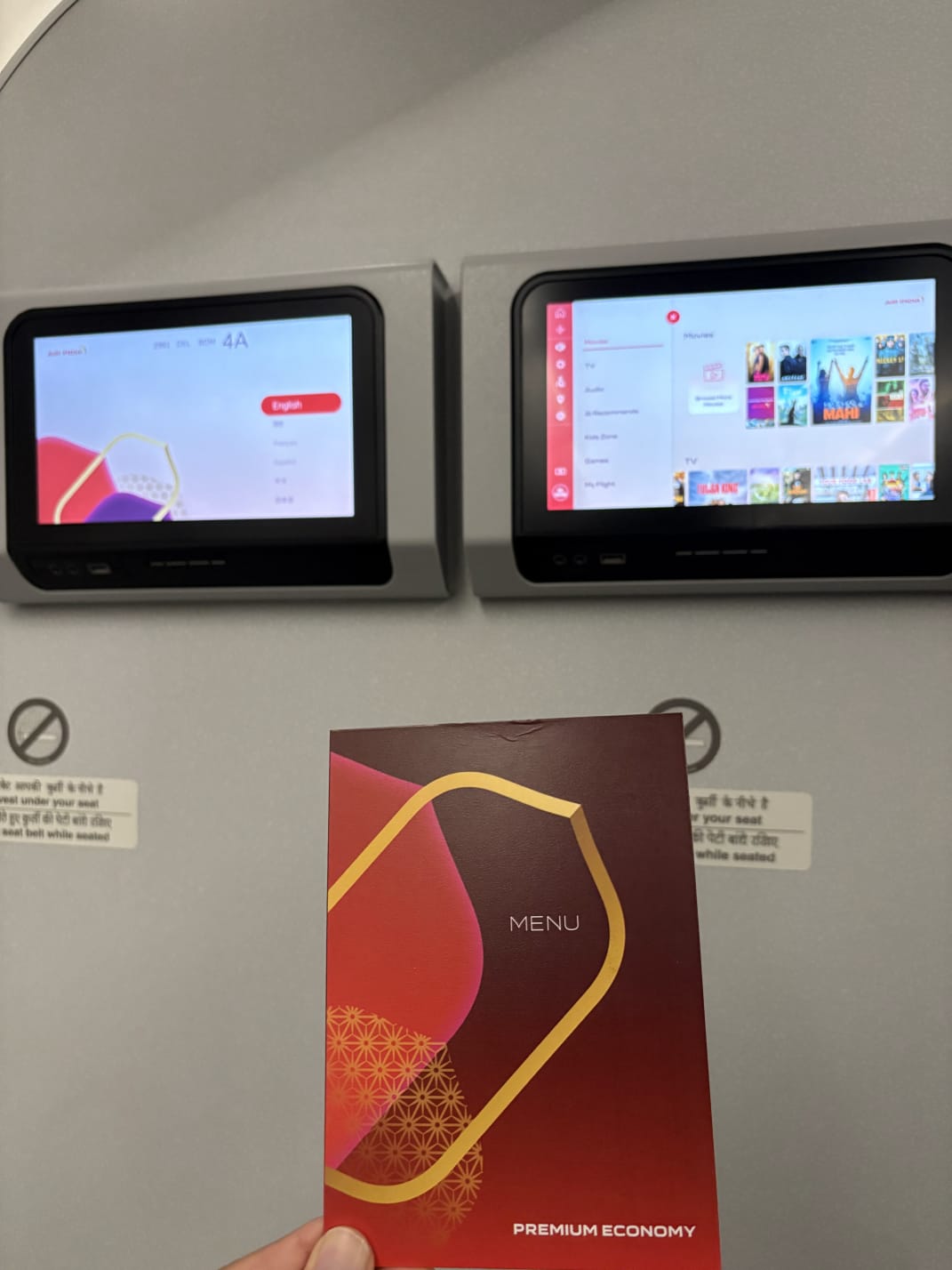
    Air India Premium Economy menu card in front of the seat screens

    The redemption story changed in 2026

    This is another reason Maharaja Club deserves a fresh look.

    In April 2026, Air India substantially revised its award pricing.

    Domestic awards now start from 1,500 Maharaja Points, while international awards start from 10,000 points, with region-based levels introduced.

    Examples of starting Economy levels include:

    UK & Europe: 35,000 points

    U.S. and Australia: from 40,000 Maharaja Points; Canada: from 50,000 Maharaja Points

    Southeast Asia: 12,000 points

    Gulf & Middle East: 12,000 points

    These are indicative starting levels and availability matters.

    Air India also said that Economy redemption levels were reduced by around 30% on average across 80% of domestic routes and 75% of international routes.

    Business Class saw average reductions of around 15% on 70% of domestic routes and around 25% on 35% of international routes.

    But—and this is important—not every route got cheaper.

    Some routes actually became more expensive.

    For example, Air India’s own comparison shows Delhi–London Economy moving from 30,000 to 35,000 points, while Delhi–Bali fell from 25,000 to 12,000.

    So don’t assume:

    “The new award chart is cheaper.”

    The more accurate statement is:

    Some redemptions became substantially better, while others became worse.

    That’s why you should always check the actual award price before transferring or buying points.


    And this is where Maharaja Club becomes interesting for Indians

    Let’s say you’re based in India and have a credit card ecosystem that gives you access to airline points.

    Suddenly, Maharaja Club becomes another potential use case.

    Instead of transferring everything to one international airline programme, you can potentially use points for:

    Domestic Air India flights

    International Air India flights

    Star Alliance awards

    Cabin upgrades

    and potentially Air India Express travel.

    And because Air India has such a large Indian network, there are plenty of opportunities to use the currency.


    But should you transfer all your credit-card points to Maharaja Club?

    Absolutely not.

    This is one of the biggest mistakes people make.

    The fact that you can transfer points somewhere doesn’t mean you should.

    I would only transfer when I have:

    A specific flight in mind

    +

    A confirmed award price

    +

    Availability

    +

    A reasonable value per point

    Don’t transfer 100,000 credit-card points into Maharaja Club just because you think:

    “I’ll figure out where to use them later.”

    Once transferred, you’re generally moving into a much less flexible currency.

    Transfer when you have a plan.

    Not because the programme looks exciting.


    My favourite Maharaja Club feature isn’t actually the earning rate

    It’s the award flexibility attached to status.

    Think about this.

    You book a flight using points.

    Plans change.

    If you’re Red, you have considerably less flexibility.

    If you’re Silver, you get a longer cancellation window.

    Gold gives you more flexibility.

    And Platinum gives you an almost ridiculous amount of flexibility:

    up to 2 hours before departure for eligible Award Flights.

    That changes how comfortable I am booking an award ticket.

    And that’s something I value more than earning an extra couple of points per ₹100.


    So which tier should you chase?

    Here’s my completely subjective take.

    Red

    Don’t chase it.

    It’s simply your entry point.

    Silver

    Worth having.

    Especially if you fly Air India reasonably often.

    Baggage + upgrade voucher make this useful.

    Gold

    The sweet spot for many travellers.

    You get lounge access, better baggage, free standard seat selection, Fly Prior, upgrade vouchers and better flexibility.

    If you fly Air India regularly, this is probably the tier I’d target.

    Platinum

    The aspirational tier.

    If you’re already flying enough to qualify, absolutely enjoy it.

    But I wouldn’t manufacture unnecessary Air India travel just to reach Platinum.

    The benefits are excellent.

    The question is whether you’re flying enough naturally to justify the chase.


    The really interesting part: Credit-card points → Maharaja Club

    If you are into points and miles in India, this is probably the section you actually came here for.

    You don’t necessarily have to fly Air India to build a Maharaja Club balance.

    You can also convert points from several banking and rewards programmes into Maharaja Points.

    And this is where Maharaja Club becomes particularly interesting for an Indian points collector.

    Air India currently has a fairly broad network of banking and points-conversion partners.

    But — and this is important — the conversion ratio depends heavily on the bank and the card you hold.

    So don’t look at this as:

    “My bank transfers to Air India, therefore it’s a good transfer.”

    The ratio matters.

    A lot.


    The major credit-card transfer partners

    Here’s the current landscape I would keep bookmarked:

    Bank / ProgrammeExamplesMaharaja Club conversion
    Axis BankEDGE Rewards / EDGE MilesVaries by card
    HDFC BankInfinia, Infinia Metal, Diners Black, Diners Black Metal, Regalia Gold2:1 / 3:1
    HSBCEligible HSBC Reward PointsCheck current ratio
    ICICI BankICICI Reward PointsCheck current ratio
    IndusInd BankEligible credit cardsCheck current ratio
    YES BANKYES Reward PointsCheck current ratio
    RBL BankRBL Reward PointsCheck current ratio
    DBS BankDBS Vantage, DBS Spark, Bajaj Finserv DBS SuperCard5:4 / 6:1
    Kotak Mahindra BankKotak Air MilesCheck current ratio
    Federal BankFederal Reward PointsCheck current ratio
    Union Bank of IndiaUnion PointsCheck current ratio
    Punjab National BankPNB Reward PointsCheck current ratio
    Central Bank of IndiaCent PointsCheck current ratio
    South Indian BankSIB PointsCheck current ratio
    Karur Vysya BankAnmol PointsCheck current ratio
    JupiterJupiter JewelsConversion available
    Air India SBI CardMaharaja Club co-brandEarn directly as Maharaja Points

    Air India’s current partner directory confirms these conversion relationships, although individual card eligibility and transfer ratios vary.


    Let’s look at the important ones

    Rather than overwhelm you with every bank in the ecosystem, these are the ones I think most TravelWithCards readers should know about.

    1. Axis Bank

    This is one of the most interesting options.

    Axis allows eligible EDGE Reward Points and EDGE Miles to be converted into Maharaja Points.

    And the ratio varies dramatically depending on the card.

    For example:

    Axis cardConversion
    Burgundy Private5 EDGE Reward Points → 4 Maharaja Points
    Magnus / Reserve5 EDGE Reward Points → 2 Maharaja Points
    Atlas1 EDGE Mile → 2 Maharaja Points
    Select / Privilege / Rewards10 → 1
    Other eligible cards20 → 1

    That makes the Axis Atlas → Maharaja Club relationship particularly interesting.

    One EDGE Mile converts to 2 Maharaja Points.

    So if you have Atlas, Maharaja Club becomes another potential use of your EDGE Miles.

    But don’t transfer blindly.

    Atlas miles can have other uses, and you should compare the opportunity cost before moving them.


    2. HDFC Bank

    HDFC has a direct Maharaja Club conversion route through SmartBuy.

    And the ratios are quite straightforward:

    HDFC cardHDFC Reward Points → Maharaja Points
    Infinia / Infinia Metal2:1
    Diners Black / Diners Black Metal2:1
    Regalia Gold3:1

    Transfers are initiated through HDFC SmartBuy and Air India says the points are generally credited to Maharaja Club within 2–4 working days.

    For example:

    10,000 Infinia points → 5,000 Maharaja Points.

    That can be useful if you have a specific Air India award in mind.

    But again:

    Don’t transfer just because you can.

    HDFC points have multiple redemption options, so Maharaja Club should be compared against those alternatives.


    3. HSBC

    HSBC is another important partner in the ecosystem.

    Eligible HSBC Reward Points can be converted into Maharaja Points through the bank’s rewards platform.

    This is particularly relevant because HSBC points can already be useful for several travel programmes.

    So again, Maharaja Club becomes another option, not necessarily the default redemption.

    Air India currently lists HSBC Global as a Maharaja Club conversion partner.


    4. ICICI Bank

    ICICI Bank also allows eligible ICICI Reward Points to be converted into Maharaja Points.

    This is worth knowing if you’re an ICICI cardholder because it means your ICICI points aren’t restricted to the bank’s own redemption catalogue.

    You can potentially move them into the Air India ecosystem for:

    Award Flights

    or

    Cabin Upgrades.

    Air India currently lists ICICI Bank Rewards as a conversion partner.


    5. IndusInd Bank

    IndusInd is another current conversion partner.

    Eligible IndusInd credit-card reward points can be converted into Maharaja Points.

    This is particularly useful because some IndusInd cards have relatively strong reward earning rates, making the effective Maharaja Point earning rate more important than simply looking at the conversion ratio.

    Air India’s current partner directory confirms the conversion partnership.


    6. YES BANK

    YES BANK allows eligible YES Reward Points to be converted into Maharaja Points.

    Interestingly, Air India also lists YES BANK’s Rewardz programme, meaning the ecosystem isn’t restricted purely to credit cards.


    7. RBL Bank

    RBL Reward Points can also be converted into Maharaja Points.

    Again, check the current ratio and eligible cards before transferring.

    Air India currently lists RBL Bank among its Maharaja Club conversion partners.


    8. DBS Bank

    DBS has some particularly interesting conversion ratios.

    Currently:

    DBS Vantage: 5 DBS Points → 4 Maharaja Points

    DBS Spark: 6 → 1

    Bajaj Finserv DBS SuperCard: 6 → 1

    The Vantage ratio is clearly the standout here.


    And then there are the other partners

    Air India’s current conversion ecosystem is actually quite large.

    It also lists:

    Kotak Mahindra Bank

    Federal Bank

    Union Bank

    Punjab National Bank

    Central Bank of India

    South Indian Bank

    Karur Vysya Bank

    Jupiter

    and others.

    There are also non-bank conversion partners such as:

    IHG One Rewards

    Emirates NBD Plus Points

    Onpoint

    Maximize

    HeyMax

    and others.

    This is important because Maharaja Club is no longer dependent solely on Air India flights for earning.


    But here’s my biggest warning

    Just because a transfer exists doesn’t mean it’s a good transfer.

    This is something I think is particularly important for Indian credit-card users.

    Suppose you have:

    10,000 bank points.

    You should NOT ask:

    “How many Maharaja Points will I get?”

    The first question should be:

    “What else can I do with these 10,000 bank points?”

    For example, your bank points may also transfer to:

    • Marriott Bonvoy
    • Accor ALL
    • KrisFlyer
    • British Airways
    • Qatar Airways
    • Etihad
    • other airline/hotel programmes

    depending on the bank and card.

    So Maharaja Club should be treated as one redemption option in your points portfolio.

    Not necessarily the best one.


    My rule for transferring to Maharaja Club

    I use a very simple three-step rule.

    1. Find the flight

    Don’t start with your credit-card points.

    Start with the journey.

    Delhi → London

    Delhi → Tokyo

    Mumbai → Singapore

    Whatever you’re actually planning.

    2. Check the award price

    Go into Maharaja Club and see how many points the flight actually costs.

    And check availability.

    Don’t rely on an award chart alone.

    3. Transfer only what you need

    Once you’ve found:

    the flight

    +

    the date

    +

    the award availability

    +

    the number of Maharaja Points required

    then transfer the bank points.

    Not before.

    Because once your bank points become Maharaja Points, you’ve lost a significant amount of flexibility.


    The points ecosystem is actually the bigger story

    This is what I find most interesting about Maharaja Club.

    You can potentially have a chain like this:

    Credit-card spend

    ↓

    Bank Reward Points

    ↓

    Maharaja Points

    ↓

    Air India / Air India Express / Star Alliance award

    That means the programme doesn’t exist in isolation.

    It’s part of the larger Indian points ecosystem.

    And for someone who already collects credit-card points, that’s where the opportunity lies.


    My current shortlist

    If I had to simplify all of this for someone just starting out:

    Most interesting to investigate

    Axis EDGE Miles

    HDFC Infinia / Diners Black

    HSBC

    ICICI

    IndusInd

    DBS Vantage

    And then look at the other partners if you already hold those cards.

    But I would never recommend transferring based solely on the bank name.

    The exact card matters.

    The conversion ratio matters.

    The alternative uses of the points matter.

    And most importantly:

    The redemption matters.


    One final rule

    If you remember only one thing from this article, remember this:

    Don’t collect Maharaja Points because they exist.

    Collect them because you know where you’re going to use them.

    That’s the difference between collecting points…

    and actually getting value from them.


    And here’s my personal verdict

    Airport apron with IndiGo and Air India aircraft

    I think Maharaja Club has gone from:

    “Air India’s loyalty programme”

    to

    “A genuinely interesting Indian airline loyalty programme.”

    The combination of:

    Air India

    +

    Air India Express

    +

    Star Alliance

    +

    lower award pricing on many routes

    +

    meaningful elite benefits

    +

    credit-card transfer opportunities

    makes it worth understanding.

    But I wouldn’t blindly chase it.

    The programme is strongest if:

    You fly Air India regularly

    or

    You live in a city with a strong Air India network

    or

    you frequently use Star Alliance

    or

    you can access Maharaja Club through a useful credit-card transfer partner.

    For everyone else, there may be better airline currencies.


    Air India wing seen from the window in flight

    My simple Maharaja Club mental model

    If you’re new to the programme, remember just four things:

    Maharaja Points

    Spend these.

    Tier Points

    Use these to earn status.

    Status

    Silver → Gold → Platinum

    Award availability

    Always check this before transferring points.

    That’s it.

    You don’t need to become a mileage nerd overnight.

    Start with one question:

    Where do I actually want to fly?

    Then work backwards.


    One final thought

    I’ve used Maharaja Points myself for domestic travel, and I’ve found the programme particularly interesting now that Air India has made the redemption structure more competitive on many routes.

    But I think the real opportunity is bigger than domestic economy flights.

    The combination of Star Alliance + Air India’s long-haul network + credit-card points is where I think Maharaja Club could become genuinely powerful.

    Because earning points is easy.

    The trick is knowing when they’re worth spending.


    Note: Maharaja Club rules, award pricing, qualification thresholds and benefits are subject to change and availability. The information above reflects Air India’s published programme information available in October 2026. Always check the live Air India Maharaja Club terms and Points Calculator before making a transfer or redemption.

  • Accor Explained: ALL, Platinum & ALL Accor+ Explorer – A Beginner’s Guide

    Accor Explained: ALL, Platinum & ALL Accor+ Explorer – A Beginner’s Guide

    CONFUSED ABOUT ACCOR?
    ALL. POINTS. PLATINUM. EXPLORER.
    Here’s how it all works.

    If you’ve ever looked at an Accor hotel booking and thought:

    “Wait… what exactly is Accor?”

    You’re not alone.

    Is Novotel Accor?
    Is ibis Accor?
    What is ALL?
    What’s the difference between ALL and ALL Accor+ Explorer?
    What do Silver, Gold and Platinum actually mean?
    And why do people like me get disproportionately excited about 2,000 points = €40? 😄

    I’ve been using Accor hotels for quite some time, and after my recent Goa trip across three Accor properties, I thought it was finally time to explain the entire ecosystem from scratch.

    Let’s start at the beginning.


    It started with a Novotel in France

    The Accor story begins in 1967.

    Two French entrepreneurs, Paul Dubrule and Gérard Pélisson, opened the first Novotel in Lille, France.

    Their idea was relatively simple:

    Take the consistency and convenience of the American motel concept and bring it to Europe.

    But the Novotel they created was quite revolutionary for its time.

    A private bathroom.

    A desk.

    Room service.

    A restaurant.

    A swimming pool.

    Breakfast.

    And, importantly, a consistent hotel experience.

    At a time when many hotels were still small, independent establishments, the founders were essentially creating one of Europe’s first modern standardized hotel chains.

    And that little Novotel became the foundation of what would eventually become Accor.


    Then Accor started collecting hotel brands

    This is where the story gets interesting.

    Accor didn’t remain just Novotel.

    The company expanded rapidly.

    1974: ibis joins the group.

    1975: Accor acquires Mercure.

    1980: Sofitel joins the portfolio.

    And over the following decades, the group continued expanding through acquisitions, partnerships and new brands.

    Today, the Accor portfolio stretches from budget hotels to some of the world’s most luxurious properties.

    Think:

    ibis → ibis Styles → Mercure → Novotel → Pullman → Mövenpick → Swissôtel → MGallery → Sofitel → Fairmont → Raffles

    …and many more.

    So when you see an ibis, a Novotel and a Raffles, don’t think of them as completely unrelated hotel companies.

    They sit within the broader Accor ecosystem.

    And that’s where things become particularly interesting for people who like hotel loyalty programmes.


    So what is ALL?

    ALL Accor Live Limitless
    ALL Accor Live Limitless logo, Wikimedia Commons (public domain; trademarks belong to Accor).

    ALL = Accor Live Limitless.

    This is Accor’s loyalty programme.

    And the important thing is:

    ALL is FREE.

    You don’t need to pay to join.

    You create an account, book eligible stays, and start earning points and status.

    There are two completely different things you need to understand:

    Reward Points

    These are the points you can actually spend.

    Accor currently values:

    1,000 Reward Points = €20

    or

    2,000 Reward Points = €40.

    You can use them to reduce the cost of eligible hotel stays and participating experiences.

    This is one of the reasons I like Accor.

    There isn’t a complicated award chart.

    No searching for “standard rooms”.

    No wondering whether a hotel costs 20,000 or 35,000 points tonight.

    You simply use the points against your eligible bill.


    But ALL also has Status Points and Status Nights

    ALL members floor
    ALL members floor

    And this is where beginners often get confused.

    Reward Points and Status Points are NOT the same thing.

    Think about them this way:

    Reward Points = money

    You accumulate them and eventually spend them.

    Status Points/Nights = status

    They help you move through the ALL elite tiers.

    And there are five standard levels:

    Classic → Silver → Gold → Platinum → Diamond

    There is also Limitless, but that’s an invitation-only level rather than a normal tier you work toward.

    So let’s break down the ladder.


    The ALL status ladder

    ALL Status Qualification Reward Points bonus Some key benefits
    Classic Join ALL — Member rates, premium Wi-Fi
    Silver 10 nights OR 2,000 Status Points +24% Welcome drink, priority welcome, late check-out*
    Gold 30 nights OR 7,000 Status Points +48% Room upgrades*, early check-in/late check-out*, guaranteed availability*
    Platinum 60 nights OR 14,000 Status Points +76% Suite Night Upgrades, lounge access*, early check-in/late check-out*, breakfast in Asia-Pacific*
    Diamond 26,000 Status Points +100% Platinum benefits + weekend breakfast worldwide, daily breakfast in Asia-Pacific*, dining & spa rewards, Gold status to gift

    *Benefits depend on the hotel, brand, availability and applicable programme rules.

    The important thing here is that the qualification requirements aren’t simply a number of hotel nights.

    You can qualify using either Status Nights or Status Points for Silver, Gold and Platinum.

    For example:

    Silver: 10 nights OR 2,000 Status Points

    Gold: 30 nights OR 7,000 Status Points

    Platinum: 60 nights OR 14,000 Status Points

    Diamond: 26,000 Status Points

    Diamond is different because there isn’t a nights-based route.


    Classic: “I’m just getting started”

    Classic is what you get when you join ALL.

    It’s free.

    You get access to member rates, premium Wi-Fi and the ability to earn Reward Points and Status Points.

    If you stay at Accor hotels only occasionally, this may be all you need.

    But if you start staying regularly, things get more interesting.


    Silver: “I stay occasionally”

    Silver starts at 10 nights or 2,000 Status Points.

    You receive a 24% Reward Points bonus compared with Classic.

    You also get benefits such as a welcome drink, priority welcome and late check-out, subject to the applicable conditions.

    Nothing revolutionary.

    But if you’re already staying at Accor hotels, there’s little reason not to chase Silver.


    Gold: “Now the hotel starts recognising you”

    Gold requires 30 nights or 7,000 Status Points.

    This is where I think the programme starts getting interesting.

    You become eligible for benefits including room upgrades, early check-in, late check-out and guaranteed room availability under the programme’s conditions.

    And you get a 48% Reward Points bonus.

    This is also where ALL Accor+ Explorer becomes interesting.

    Why?

    Because Explorer currently gives members 30 Status Nights.

    That means it can effectively give you Gold status or provide a substantial head start if you’re already at Gold or above.

    We’ll come back to Explorer in a minute.


    Platinum: “This is where I personally start paying attention”

    Platinum requires 60 nights or 14,000 Status Points.

    This is the tier I had during my Goa trip.

    And this is where the benefits become much more tangible.

    You get:

    Suite Night Upgrades

    Lounge access at participating hotels

    Early check-in and late check-out

    Complimentary breakfast at participating Asia-Pacific hotels, subject to the applicable rules

    and a 76% Reward Points bonus compared with Classic.

    And this is exactly why I keep saying:

    Points pay for your stay. Status can change your stay.

    My Goa trip was a perfect example.

    At Novotel Dona Sylvia, we received breakfast and lounge access.

    At Mercure Goa Devaaya, we were upgraded to a river-view room with a jacuzzi and received breakfast.

    At ibis Styles Goa Vagator, we received breakfast, but there wasn’t a meaningful room upgrade available.

    Same Platinum status.

    Three completely different outcomes.

    And that’s an important lesson:

    Elite status doesn’t mean you automatically get a suite everywhere.

    It means you’re eligible for benefits, subject to the hotel, availability and programme rules.


    Diamond: “Now you’re playing a different game”

    Diamond requires 26,000 Status Points.

    There is no nights-based route to Diamond.

    You get the Platinum benefits, plus benefits including:

    Free weekend breakfast worldwide

    Daily breakfast in Asia-Pacific

    Dining & Spa Rewards

    and the ability to gift Gold status to another person.

    The Reward Points bonus also reaches 100% compared with Classic.

    This is a genuinely high level of Accor loyalty and considerably harder to reach than Platinum.


    So where does ALL Accor+ Explorer fit?

    ALL Accor+ Explorer
    ALL Accor+ Explorer logo, Wikimedia Commons (public domain; trademarks belong to Accor).

    This is where people often get confused.

    Explorer is NOT another ALL status tier.

    It is a paid annual membership that sits alongside your normal ALL account.

    Think of it this way:

    ALL = free loyalty programme

    Explorer = paid membership that adds additional benefits

    Your ALL status — Silver, Gold, Platinum or Diamond — is a separate thing.


    What does Explorer actually give you?

    The current ALL Accor+ Explorer membership includes several major benefits.

    1. Two Stay Plus free nights

    This is probably the headline benefit.

    You get two Stay Plus benefits each membership year at participating hotels in Asia Pacific and the UAE.

    The important catch:

    Each benefit is linked to an eligible stay of at least two nights.

    So it isn’t:

    “Book one night and get another night free.”

    Instead, think:

    Stay 2+ nights → one eligible room night can be free.

    And you can use the benefit twice during the membership year.

    The free-night benefit is generally room-only, so don’t assume breakfast and other inclusions are automatically included.


    2. 30 Status Nights

    This is potentially even more interesting.

    Explorer gives you 30 Status Nights each membership year.

    That means you can receive Gold status or higher depending on your existing ALL status, or use the nights as a head start toward a higher tier.

    For someone who doesn’t stay 30 nights a year but wants Gold status, this can be a very meaningful benefit.


    3. Dining discounts

    Explorer also gives members discounts at participating restaurants and bars.

    Currently, the headline benefit is:

    30% off dining

    and

    15% off drinks

    for eligible dining at participating properties across Asia Pacific and the UAE.

    There are conditions and exclusions, so don’t assume every Accor restaurant qualifies.

    But if you regularly eat at hotel restaurants, this can add up surprisingly quickly.


    4. Red Hot Rooms

    Explorer members also get access to Red Hot Rooms.

    These are selected member-only hotel offers, with discounts of up to 50% at participating hotels in Asia Pacific and the UAE.

    The important words are:

    up to.

    It’s not a blanket 50% discount at every Accor hotel.

    Dates, properties and availability matter.

    But some of these offers can be genuinely useful.


    5. Additional worldwide hotel discounts

    Explorer also provides an additional discount on eligible Explorer Member Rates at thousands of hotels across the Accor portfolio worldwide.

    So Explorer isn’t purely an Asia-Pacific product.

    Its hotel-rate benefits can extend much further.


    ALL vs Explorer

    Here’s the simplest way to think about it.

    ALL ALL Accor+ Explorer
    Cost Free Paid annual membership
    Earn Reward Points ✅ ✅
    Redeem Reward Points ✅ ✅
    Earn elite status ✅ ✅
    Member hotel rates ✅ ✅
    Stay Plus free nights ❌ 2 per year
    Status Nights Earn through stays 30 Status Nights
    Dining discount ❌ 30% dining
    Drinks discount ❌ 15% drinks
    Red Hot Rooms ❌ ✅
    Additional Explorer rates/offers ❌ ✅

    So you don’t choose between ALL and Explorer.

    Explorer sits on top of ALL.


    And then there’s Platinum

    This is where the entire system comes together.

    You can have:

    ALL membership

    ↓

    ALL Accor+ Explorer membership

    ↓

    Platinum status

    And each does something different.

    ALL gives you the loyalty account.

    Explorer gives you additional paid benefits and 30 Status Nights.

    Platinum gives you elite recognition and benefits during your hotel stays.

    And then you earn and redeem Reward Points along the way.

    Once you understand those layers, Accor becomes much easier to navigate.


    My Goa trip is the perfect example

    Novotel Goa Dona Sylvia
    Novotel Goa Dona Sylvia

    I recently spent eight nights in Goa across three Accor properties:

    Novotel Goa Dona Sylvia

    Mercure Goa Devaaya

    Mercure Goa Devaaya entrance sign
    Mercure Goa Devaaya

    ibis Styles Goa Vagator

    Across the three hotels, I used 26,000 ALL Reward Points.

    And the interesting part wasn’t just the points.

    My Accor Platinum status also gave me benefits during the trip.

    At Dona Sylvia:

    Breakfast + lounge access

    At Mercure Devaaya:

    Breakfast + river-view jacuzzi room upgrade

    At ibis Styles:

    Breakfast

    So when people ask:

    “What’s the point of hotel status if you’re already paying with points?”

    This trip is my answer.

    The points paid for the stay.

    The status improved the stay.


    And this is what the numbers looked like

    The three hotel stays were:

    Hotel ALL Points Used Cash Paid
    Novotel Dona Sylvia 12,000 ₹4,180.92
    Mercure Goa Devaaya 8,000 ₹2,065
    ibis Styles Goa Vagator 6,000 ₹1,114.77
    Total 26,000 ₹7,360.69

    For the entire Goa trip, including flights, I used:

    46,000 total points

    and paid:

    ₹11,800.69 in cash.

    That included 20,000 airline points for the flights and the associated taxes and fees.

    Was it a “free” holiday?

    No.

    But points brought the cash cost of an eight-night Goa trip for two down dramatically.

    And that’s what I actually care about.


    So should you get into Accor?

    I wouldn’t say everyone needs to.

    If you stay in Accor hotels once every couple of years, there isn’t much reason to obsess over the programme.

    But if you’re regularly staying at:

    ibis

    Novotel

    Mercure

    Pullman

    Mövenpick

    Swissôtel

    Sofitel

    Fairmont

    Raffles

    or the other Accor brands…

    then understanding ALL is worthwhile.

    And if you travel frequently enough, Explorer is where the maths starts becoming interesting.

    Because you potentially have:

    free nights

    +

    hotel discounts

    +

    dining discounts

    +

    30 Status Nights

    +

    ALL elite benefits

    all working together.


    One final thing about Accor

    What I like most about Accor is actually something very simple.

    You don’t have to be a luxury traveller.

    You can earn ALL points at an ibis.

    Use them at a Novotel.

    Get status benefits at a Mercure.

    And eventually use the ecosystem at a Sofitel, Fairmont or Raffles.

    The same loyalty ecosystem follows you through the portfolio.

    And that, more than anything, is why I think Accor is worth understanding if you’re serious about hotel points in India.

    If you’re completely new to Accor, bookmark this one.

    Because this is the foundation.

    The next question is the one everyone really cares about:

    How do you earn ALL points faster in India — especially through credit cards? 😉


    Note: Accor benefits, qualification thresholds, participating properties, discounts and Explorer terms can change. Always check the current ALL and ALL Accor+ terms before making a booking or purchasing a membership.